Buy wittenburg.eu ?
We are moving the project
wittenburg.eu .
Are you interested in purchasing the domain
wittenburg.eu ?
domain@kv-gmbh.de · 0541-91531010
Buy wittenburg.eu ?
What did Poggio steal?
Poggio Bracciolini, an Italian scholar and scribe, is known for stealing a manuscript containing the only surviving copy of Lucretius' "De rerum natura" (On the Nature of Things) from a German monastery in the 15th century. This act of theft was significant because it led to the rediscovery and subsequent dissemination of this important work of ancient Roman poetry and philosophy, which had been lost for centuries. Poggio's theft played a crucial role in preserving and transmitting the ideas of Lucretius to future generations. **
Is Neuschwanstein Castle a medieval castle?
No, Neuschwanstein Castle is not a medieval castle. It was built in the 19th century by King Ludwig II of Bavaria in a romanticized medieval style. The castle's design was inspired by medieval castles, but it was constructed using modern building techniques and materials. Despite its medieval appearance, Neuschwanstein Castle is considered a 19th-century palace. **


Similar search terms for Poggio-Scalette-Poggio-Scalette
Top-Angebote
Products related to Poggio-Scalette-Poggio-Scalette:
-
"""Poggio Scalette""" """Poggio Scalette Il Carbonaione 2020 Red Wine - Italy""""""Il Carbonaione is a full-bodied, rich wine with an exuberant personality and great aging potential. It has abundant aromas of red and dark berry fruits - tart cherries, blackberries, currants, and plums with notes of spice. On the palate, the wine..."50,99 $*Shipping: 0,00 $Secure redirect to the provider
-
"""Poggio Scalette""" """Poggio Scalette Piantonaia Alta Valle della Greve Merlot 2017 Red Wine - Italy""""""Produced entirely form Merlot grapes in a Vineyard located on the higher part of the Ruffoli hill in the heart of Chianti Classico. An aromatic impact which amazes for its originality and convinces with its sobriety on the palate, the sensations of..."73,99 $*Shipping: 0,00 $Secure redirect to the provider
-
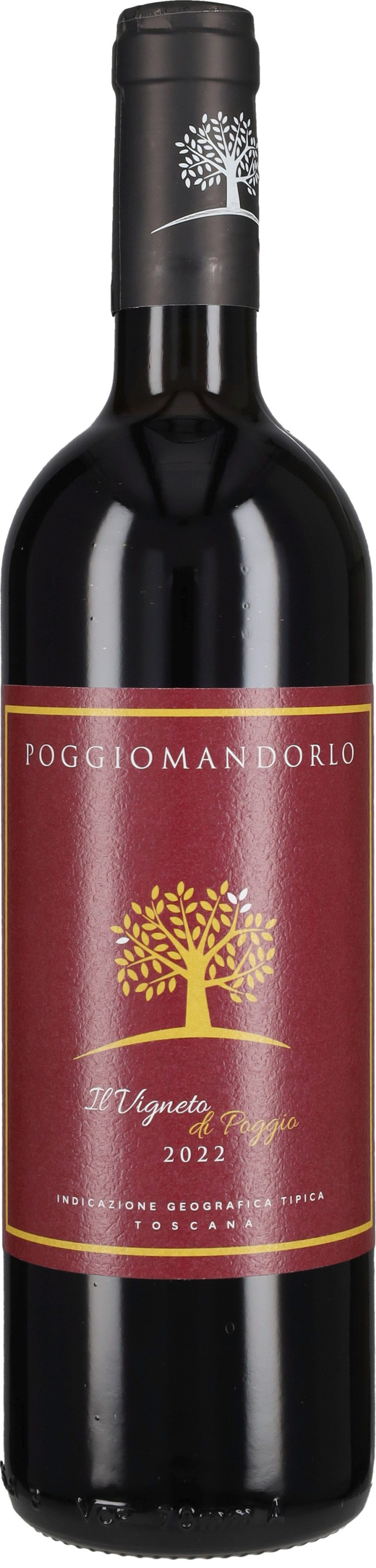
'Il Vigneto di Poggio' Poggio Mandorlo 2022“The Vineyard of Poggio” by Poggio Mandorlo is a proud expression of the rich wine landscape of Maremma. It tells the story of four friends: Roberto, Felice, Giuseppe, and Fabio, who for about twenty years have decided to experiment with the potential of a territory. Supported by the oenologist Roberto Cipresso first and then Filippo Paoletti, noted figures from the Montalcino area, they have managed to navigate the virtues of the Seggiano soils to obtain unique and never banal labels. Located at the crossroads between Val Norcia and the first hills of the Grosseto Maremma, at the foot of the Amiata volcano, the winery decides to cultivate not only Sangiovese but also rare and unique clones of Merlot and Cabernet Franc, which they import directly from Saint-Émilion in the Bordeaux region. The latest offspring of Poggio Mandorlo is precisely “the Vineyard of Poggio”, capable of expressing the versatility of the sandstone and limestone marls on which the Merlot, of which this interesting label is entirely composed, takes root. The vines were planted in 2001 and the harvest is carried out exclusively with manual selection. Fermentation takes place in stainless steel tanks at controlled temperature, during which delicate pump-overs are performed. The maceration period varies from 8 to 12 days and is meticulously monitored through chemical and sensory analysis. The 12 months of aging also take place in steel, giving us a bottle that perfectly expresses the great varietal rigor even through an international grape variety. Poggio Mandorlo with its “Vigneto di Poggio” of pure Merlot envelops us with its shining ruby veil to gift us with scents of wilted rose and wild fruit, pleasant notes of plum, underbrush, cherry, and a finish of black pepper and cinnamon. On the palate, it presents warm aromas for a full body in which the fragrance of red fruit is found, with a pleasant fresh shoulder softened by a good sapidity, the tannin is tasty and almost caressing. Poggio Mandorlo expresses all its commitment to the passion for the land and the love for good wine, reflecting in the personality of this pleasing label.12,00 £*Shipping: 48,00 £Secure redirect to the provider
-
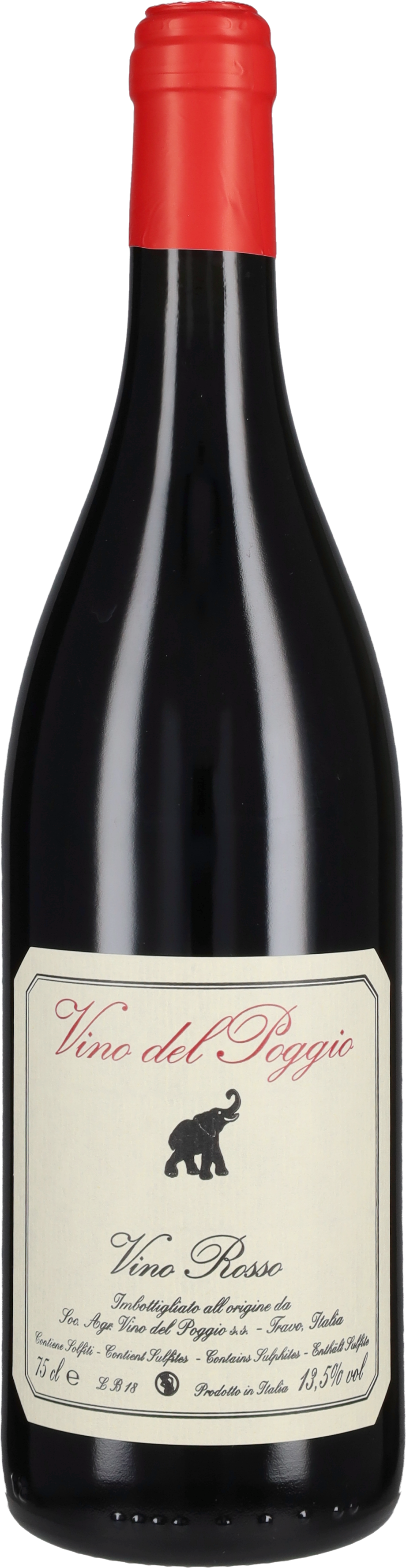
Vino del Poggio - Andrea Cervini Rosso Vino del PoggioThe Rosso Vino del Poggio is a label with an artisanal character, inspired by the oldest traditions of good everyday wine from the past. It is produced with a selection of red grape varieties from the estate's vineyards, vinified in assembly to achieve a harmonious and balanced final result. It is a bottle with an intense and fruity sip, a straightforward and satisfying wine. The very simple vinification, carried out with minimal oenological intervention and only aiming to assist the transformation of the grapes into wine, gives the bottle a typically convivial personality. It is perfect to enjoy in the company of friends in informal situations. The Rosso is produced in a small Piacenza reality. Vino del Poggio is a winery founded by Andrea Cervini in the hilly area of Val Trebbia. The vineyards are located within an uncontaminated environmental context, and the winery is managed with the utmost respect for nature, according to the principles of organic farming. Only small quantities of sulfur and copper with the intent of producing genuine and healthy grapes. The vineyards of red grape varieties are about 10 years old and are cultivated on calcareous-clay soils. The grapes ferment spontaneously with indigenous yeasts in temperature-controlled stainless steel tanks with a long maceration on the skins. The wine matures in steel and is bottled without filtration and without the addition of sulfur dioxide, in order to maintain the expressive integrity of the grape. The Rosso Vino del Poggio is a bucolic label, inspired by the peasant world of the past and a simple and natural viticulture, which did not know chemistry and invasive oenology. Visually, it presents a bright ruby red color and expresses a bouquet with intense aromas of small red berries, cherry, currant, wild strawberries, hints of underbrush, humus, delicate spices, and medicinal herbs. With good structure, it is characterized by ripe tannins and a generous and juicy fruit, which extends towards a harmonious, fresh, and savory finish.15,00 £*Shipping: 48,00 £Secure redirect to the provider


-
What are electricity and high culture history?
Electricity history refers to the development and use of electricity as a form of energy, including the discovery of electricity, the invention of electric devices, and the establishment of electrical systems. High culture history, on the other hand, refers to the history of cultural and artistic achievements that are considered to be of high quality and sophistication, such as classical music, literature, fine arts, and theater. Both electricity and high culture history have evolved over time, shaping the way we live and appreciate the world around us. **
-
What is the difference between low culture and high culture in history?
Low culture refers to the cultural activities and products that are considered to be more common, popular, and easily accessible to the general public. This can include things like popular music, television shows, and mass-produced literature. On the other hand, high culture refers to the cultural activities and products that are considered to be more refined, sophisticated, and often associated with the elite or educated classes. This can include things like classical music, fine art, and literature that is considered to be more intellectually challenging. The distinction between low and high culture has been a source of debate and has evolved over time, but it generally reflects the social and class divisions within a society. **
-
Which medieval and ancient history series can you recommend?
I recommend the "A History of the Ancient World" series by Chester G. Starr, which provides a comprehensive overview of ancient civilizations from the earliest times to the fall of the Roman Empire. Another great series is "The Middle Ages" by Morris Bishop, which offers a detailed and engaging exploration of medieval history. Both series are well-researched, accessible to a wide audience, and provide a thorough understanding of the ancient and medieval world. **
-
Does anyone know about the Islamic Golden Age in architecture and culture?
Yes, the Islamic Golden Age was a period of great cultural and architectural achievements in the Islamic world, spanning from the 8th to the 14th century. During this time, Islamic scholars made significant advancements in fields such as mathematics, astronomy, medicine, and philosophy. In terms of architecture, the Islamic world produced stunning examples of mosques, palaces, and other structures, characterized by intricate geometric patterns, domes, and arches. This period also saw the development of beautiful decorative arts such as calligraphy, ceramics, and textiles. Overall, the Islamic Golden Age left a lasting legacy in both architecture and culture. **


Is mass tourism a necessary economic factor or a destruction of culture and environment?
Mass tourism can be seen as a necessary economic factor as it brings in revenue and creates jobs in the tourism industry. However, it can also be destructive to culture and the environment if not managed properly. Overcrowding, pollution, and the commercialization of local traditions can lead to the degradation of cultural heritage and natural resources. Therefore, it is important to strike a balance between the economic benefits of mass tourism and the preservation of culture and the environment. **
Find a children's computer game from the early 2000s set in a medieval castle.
One popular children's computer game from the early 2000s set in a medieval castle is "Castle of Dr. Brain." In this game, players explore the castle while solving puzzles and challenges to progress through different rooms and levels. The game combines educational elements with fun gameplay, making it an engaging experience for children. "Castle of Dr. Brain" is known for its colorful graphics, quirky characters, and brain-teasing puzzles, making it a beloved choice for kids interested in medieval themes and problem-solving. **
Top-Angebote
Products related to Poggio-Scalette-Poggio-Scalette:
-
"""Poggio Scalette""" """Poggio Scalette Capogatto 2020 Red Wine - Italy""""""Deep purple in color, this wine has aromas of black cherries and secondary notes of cassis, mint, and blueberries. This rich wine is well balanced by its velvety tannins, vibrant acidity, and long finish. Pair this wine with braised ribs,..."58,99 $*Shipping: 0,00 $Secure redirect to the provider
-
"""Poggio Scalette""" """Poggio Scalette Il Carbonaione 2020 Red Wine - Italy""""""Il Carbonaione is a full-bodied, rich wine with an exuberant personality and great aging potential. It has abundant aromas of red and dark berry fruits - tart cherries, blackberries, currants, and plums with notes of spice. On the palate, the wine..."50,99 $*Shipping: 0,00 $Secure redirect to the provider
-
"""Poggio Scalette""" """Poggio Scalette Piantonaia Alta Valle della Greve Merlot 2017 Red Wine - Italy""""""Produced entirely form Merlot grapes in a Vineyard located on the higher part of the Ruffoli hill in the heart of Chianti Classico. An aromatic impact which amazes for its originality and convinces with its sobriety on the palate, the sensations of..."73,99 $*Shipping: 0,00 $Secure redirect to the provider
-
What did Poggio steal?
Poggio Bracciolini, an Italian scholar and scribe, is known for stealing a manuscript containing the only surviving copy of Lucretius' "De rerum natura" (On the Nature of Things) from a German monastery in the 15th century. This act of theft was significant because it led to the rediscovery and subsequent dissemination of this important work of ancient Roman poetry and philosophy, which had been lost for centuries. Poggio's theft played a crucial role in preserving and transmitting the ideas of Lucretius to future generations. **
-
Is Neuschwanstein Castle a medieval castle?
No, Neuschwanstein Castle is not a medieval castle. It was built in the 19th century by King Ludwig II of Bavaria in a romanticized medieval style. The castle's design was inspired by medieval castles, but it was constructed using modern building techniques and materials. Despite its medieval appearance, Neuschwanstein Castle is considered a 19th-century palace. **
-
What are electricity and high culture history?
Electricity history refers to the development and use of electricity as a form of energy, including the discovery of electricity, the invention of electric devices, and the establishment of electrical systems. High culture history, on the other hand, refers to the history of cultural and artistic achievements that are considered to be of high quality and sophistication, such as classical music, literature, fine arts, and theater. Both electricity and high culture history have evolved over time, shaping the way we live and appreciate the world around us. **
-
What is the difference between low culture and high culture in history?
Low culture refers to the cultural activities and products that are considered to be more common, popular, and easily accessible to the general public. This can include things like popular music, television shows, and mass-produced literature. On the other hand, high culture refers to the cultural activities and products that are considered to be more refined, sophisticated, and often associated with the elite or educated classes. This can include things like classical music, fine art, and literature that is considered to be more intellectually challenging. The distinction between low and high culture has been a source of debate and has evolved over time, but it generally reflects the social and class divisions within a society. **
Similar search terms for Poggio-Scalette-Poggio-Scalette
-
'Il Vigneto di Poggio' Poggio Mandorlo 2022“The Vineyard of Poggio” by Poggio Mandorlo is a proud expression of the rich wine landscape of Maremma. It tells the story of four friends: Roberto, Felice, Giuseppe, and Fabio, who for about twenty years have decided to experiment with the potential of a territory. Supported by the oenologist Roberto Cipresso first and then Filippo Paoletti, noted figures from the Montalcino area, they have managed to navigate the virtues of the Seggiano soils to obtain unique and never banal labels. Located at the crossroads between Val Norcia and the first hills of the Grosseto Maremma, at the foot of the Amiata volcano, the winery decides to cultivate not only Sangiovese but also rare and unique clones of Merlot and Cabernet Franc, which they import directly from Saint-Émilion in the Bordeaux region. The latest offspring of Poggio Mandorlo is precisely “the Vineyard of Poggio”, capable of expressing the versatility of the sandstone and limestone marls on which the Merlot, of which this interesting label is entirely composed, takes root. The vines were planted in 2001 and the harvest is carried out exclusively with manual selection. Fermentation takes place in stainless steel tanks at controlled temperature, during which delicate pump-overs are performed. The maceration period varies from 8 to 12 days and is meticulously monitored through chemical and sensory analysis. The 12 months of aging also take place in steel, giving us a bottle that perfectly expresses the great varietal rigor even through an international grape variety. Poggio Mandorlo with its “Vigneto di Poggio” of pure Merlot envelops us with its shining ruby veil to gift us with scents of wilted rose and wild fruit, pleasant notes of plum, underbrush, cherry, and a finish of black pepper and cinnamon. On the palate, it presents warm aromas for a full body in which the fragrance of red fruit is found, with a pleasant fresh shoulder softened by a good sapidity, the tannin is tasty and almost caressing. Poggio Mandorlo expresses all its commitment to the passion for the land and the love for good wine, reflecting in the personality of this pleasing label.12,00 £*Shipping: 48,00 £Secure redirect to the provider
-
Vino del Poggio - Andrea Cervini Rosso Vino del PoggioThe Rosso Vino del Poggio is a label with an artisanal character, inspired by the oldest traditions of good everyday wine from the past. It is produced with a selection of red grape varieties from the estate's vineyards, vinified in assembly to achieve a harmonious and balanced final result. It is a bottle with an intense and fruity sip, a straightforward and satisfying wine. The very simple vinification, carried out with minimal oenological intervention and only aiming to assist the transformation of the grapes into wine, gives the bottle a typically convivial personality. It is perfect to enjoy in the company of friends in informal situations. The Rosso is produced in a small Piacenza reality. Vino del Poggio is a winery founded by Andrea Cervini in the hilly area of Val Trebbia. The vineyards are located within an uncontaminated environmental context, and the winery is managed with the utmost respect for nature, according to the principles of organic farming. Only small quantities of sulfur and copper with the intent of producing genuine and healthy grapes. The vineyards of red grape varieties are about 10 years old and are cultivated on calcareous-clay soils. The grapes ferment spontaneously with indigenous yeasts in temperature-controlled stainless steel tanks with a long maceration on the skins. The wine matures in steel and is bottled without filtration and without the addition of sulfur dioxide, in order to maintain the expressive integrity of the grape. The Rosso Vino del Poggio is a bucolic label, inspired by the peasant world of the past and a simple and natural viticulture, which did not know chemistry and invasive oenology. Visually, it presents a bright ruby red color and expresses a bouquet with intense aromas of small red berries, cherry, currant, wild strawberries, hints of underbrush, humus, delicate spices, and medicinal herbs. With good structure, it is characterized by ripe tannins and a generous and juicy fruit, which extends towards a harmonious, fresh, and savory finish.15,00 £*Shipping: 48,00 £Secure redirect to the provider
-
Vino del Poggio - Andrea Cervini Bianco Vino del PoggioThe Bianco Vino del Poggio is one of the most interesting expressions of Italian orange wine, which encapsulates rusticity as well as extreme drinkability. Andrea Cervini, a winemaker in Travo in the province of Piacenza, is one of the most respected figures in the world of artisanal wine. The step from agritourism to vineyard is short, and Andrea manages to combine these two activities thanks to his immense passion for the bucolic world. A "neighbor" of Giulio Armani, a renowned oenologist, Andrea has drawn valuable advice from the pioneer of the area and has decided to adopt long macerations for both whites and reds. Deep and impactful bottles that overturn conventional tasting standards. Truly unmissable! The wine Bianco del Poggio is made from white grapes and is configured as a clear expression of what it means to vinify without compromises; Andrea has always chosen not to use chemical or synthetic substances in his vineyards. After the manual harvest, where the selection of the bunches takes place, the grapes are transported to the winery and fermented only through the interventionof indigenous yeasts with skin maceration of about 3 months. Vinified in large wooden barrels and in bottle, it is bottled without undergoing clarification or filtration. The Bianco del Poggio immediately attracts attention with its intense amber color. Suggestive and encompassing nose, where hints of orange peel, apricot, earth, and hay chase each other, in a picture that combines the innate generosity of the area where the winery stands with a bucolic portrait. The tasting is surprising for its ability to blend great freshness with a rigorous and austere tannin. A true white disguised as red, it leaves behind a remarkable persistence and an irrepressible desire for another taste. An unmissable experience for any wine lover.22,00 £*Shipping: 48,00 £Secure redirect to the provider
-
"""Poggio Bonelli""" """Poggio Bonelli Chianti Classico 2022 Red Wine - Italy""""""An authentic, characteristic expression of the character of Sangiovese. Chianti Classico is a deep ruby red in color. Bouquet is clearly typical of Sangiovese, including hints of cherry and plum with sweet spicy notes. Full and complex in the..."25,97 $*Shipping: 0,00 $Secure redirect to the provider
-
Which medieval and ancient history series can you recommend?
I recommend the "A History of the Ancient World" series by Chester G. Starr, which provides a comprehensive overview of ancient civilizations from the earliest times to the fall of the Roman Empire. Another great series is "The Middle Ages" by Morris Bishop, which offers a detailed and engaging exploration of medieval history. Both series are well-researched, accessible to a wide audience, and provide a thorough understanding of the ancient and medieval world. **
-
Does anyone know about the Islamic Golden Age in architecture and culture?
Yes, the Islamic Golden Age was a period of great cultural and architectural achievements in the Islamic world, spanning from the 8th to the 14th century. During this time, Islamic scholars made significant advancements in fields such as mathematics, astronomy, medicine, and philosophy. In terms of architecture, the Islamic world produced stunning examples of mosques, palaces, and other structures, characterized by intricate geometric patterns, domes, and arches. This period also saw the development of beautiful decorative arts such as calligraphy, ceramics, and textiles. Overall, the Islamic Golden Age left a lasting legacy in both architecture and culture. **
-
Is mass tourism a necessary economic factor or a destruction of culture and environment?
Mass tourism can be seen as a necessary economic factor as it brings in revenue and creates jobs in the tourism industry. However, it can also be destructive to culture and the environment if not managed properly. Overcrowding, pollution, and the commercialization of local traditions can lead to the degradation of cultural heritage and natural resources. Therefore, it is important to strike a balance between the economic benefits of mass tourism and the preservation of culture and the environment. **
-
Find a children's computer game from the early 2000s set in a medieval castle.
One popular children's computer game from the early 2000s set in a medieval castle is "Castle of Dr. Brain." In this game, players explore the castle while solving puzzles and challenges to progress through different rooms and levels. The game combines educational elements with fun gameplay, making it an engaging experience for children. "Castle of Dr. Brain" is known for its colorful graphics, quirky characters, and brain-teasing puzzles, making it a beloved choice for kids interested in medieval themes and problem-solving. **
* All prices are inclusive of VAT and, if applicable, plus shipping costs. The offer information is based on the details provided by the respective shop and is updated through automated processes. Real-time updates do not occur, so deviations can occur in individual cases. ** Note: Parts of this content were created by AI.