Buy wittenburg.eu ?
We are moving the project
wittenburg.eu .
Are you interested in purchasing the domain
wittenburg.eu ?
domain@kv-gmbh.de · 0541-91531010
Buy wittenburg.eu ?
Is Neuschwanstein Castle a medieval castle?
No, Neuschwanstein Castle is not a medieval castle. It was built in the 19th century by King Ludwig II of Bavaria in a romanticized medieval style. The castle's design was inspired by medieval castles, but it was constructed using modern building techniques and materials. Despite its medieval appearance, Neuschwanstein Castle is considered a 19th-century palace. **
How do you calculate the marginal density and the joint density?
To calculate the marginal density of a random variable, you integrate the joint density function over all possible values of the other random variables. For example, to find the marginal density of X in a joint density function f(x,y), you would integrate f(x,y) with respect to y. To calculate the joint density of two random variables, you multiply the marginal densities of each variable together. For example, if X and Y are independent random variables with marginal densities f(x) and g(y) respectively, then the joint density function is given by h(x,y) = f(x) * g(y). In summary, to calculate the marginal density, integrate the joint density over all possible values of the other random variables, and to calculate the joint density, multiply the marginal densities of each variable together. **

Similar search terms for Density
Top-Angebote
Products related to Density:
-
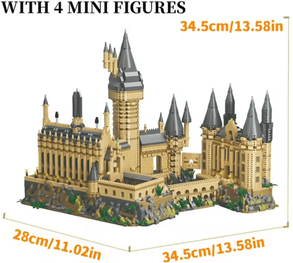
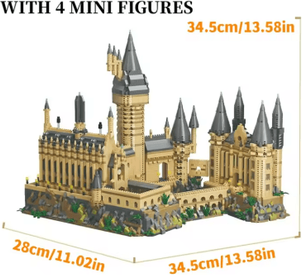
Uplift Essentials Medieval Magic Castle Micro Bricks School Architecture Palace Model High Yield Creative Interaction Hub with LightAchieve imagination optimization with this Precision MicroBrick Magic Castle. Specifically engineered for structural transparency, this highperformance technical tool acts as a vital tool for assembly efficiency, neutralizing the limitations of...226,97 $*Shipping: 0,00 $Secure redirect to the provider
-
Multicon Wholesale Hub Professional Mud Balance Liquid Density Meter Mud Hydrometer Drilling Fluid Density Tester Professional Mud Balance Liquid Density Meter Mud Hydrometer Drilling Fluid Density TesterUnlock reliable, precise density testing for heavy liquids and slurries with this robust mud balance and liquid density meter combo. Designed for engineers, lab technicians, and field technicians, it delivers consistent readings you can trust....234,97 $*Shipping: 0,00 $Secure redirect to the provider
-
From the Archives: Black History and Culture Value PackThis brand-new series is rooted in a profound commitment to shedding light on some of the important -- and often lesser-known -- aspects of Black history. From the Archives features landmarks, events, people, and artistic endeavors that have played...27,99 $*Shipping: 0,00 $Secure redirect to the provider
-
Philip Kingsley Density Conditioner 170mlTreat your fine, fragile hair with Philip Kingsley Density Thickening Conditioner. Improve the health, condition and quality of fine, fragile and thinning hair Discover thicker, more volumised hair straight from the first use. The Density Thickening Conditioner contains a unique blend of Hyper-Branched Polymers and Hydrolyzed Pea Peptides to instantly volumise fine hair. Biomimetic ceramides within this lightweight formula help to replace lost lipids in damaged hair, whilst sealing and smoothing the cuticle to help detangle and improve hair's resistance against everyday threats. Hair strands are left strengthened against future damage, as well as softer with heightened volume. Enjoy increased hair volume by 25% after one use when used in combination with Density Thickening Conditioner and Density Thickening Protein Spray* Using Density Shampoo & Conditioner together significantly reduces the likelihood of hair breakage** *Independent Instrumental Tests, compared to a standard shampoo and conditioner. **Independent Instrumental Tests, compared to both untreated hair and hair treated with a leading volumising shampoo and conditioner. Ingredients: Aqua/Water/Eau, Cetearyl Alcohol, Hydrogenated Castor Oil/Sebacic Acid Copolymer, Pisum Sativum (Pea) Peptide, Behentrimonium Chloride, Cocos Nucifera (Coconut) Oil, Phenoxyethanol, Hydroxypropyl Starch Phosphate, Polyquaternium-110, Parfum (Fragrance), Isopropyl Alcohol, Behenyl/Stearyl Aminopropanediol Esters, Ethylhexylglycerin, Ricinus Communis (Castor) Seed Oil, Sodium Hydroxide, Citric Acid, Disodium EDTA, Leuconostoc/Radish Root Ferment Filtrate, Limonene, Linalool.31,00 £*Shipping: 0,00 £Secure redirect to the provider




-
How do you calculate density in mathematics and what is density?
Density is a measure of how much mass is contained in a given volume. In mathematics, density is calculated by dividing the mass of an object by its volume. The formula for density is: density = mass/volume. This calculation allows us to determine how tightly packed the particles of a substance are, and it is commonly used in physics and engineering to describe the properties of materials. **
-
What is individual density?
Individual density refers to the number of individuals of a particular species within a given area or habitat. It is a measure of how crowded or dispersed a population is within a specific area. Individual density can have significant impacts on factors such as competition for resources, predation, and overall population dynamics. Monitoring individual density is important for understanding the health and sustainability of a population within an ecosystem. **
-
How is density calculated?
Density is calculated by dividing the mass of an object by its volume. The formula for density is: Density = Mass / Volume. Mass is typically measured in grams or kilograms, while volume is measured in cubic centimeters or cubic meters. By dividing the mass by the volume, we can determine how much mass is present in a given volume, which gives us the density of the object. **
-
What is relative density?
Relative density, also known as specific gravity, is the ratio of the density of a substance to the density of a reference substance. It is a dimensionless quantity that compares the density of a substance to the density of water at a specific temperature. Relative density is used to characterize the heaviness or lightness of a substance compared to water, and it is commonly used in various scientific and industrial applications to determine the purity or composition of materials. **

How can the density of cola be measured and what is density?
The density of cola can be measured by using a graduated cylinder and a scale. First, the mass of a known volume of cola is measured using the scale. Then, the volume of the cola is measured by pouring it into the graduated cylinder and recording the volume. Density is a measure of how much mass is contained in a given volume and is calculated by dividing the mass by the volume. In the case of cola, the density can be used to determine the amount of sugar and other dissolved substances in the liquid. **
Which of the Greek islands has the highest cat density or dog density?
It is difficult to determine which Greek island has the highest cat or dog density as this information is not readily available or documented. However, islands with larger populations and more urban areas may have higher densities of cats and dogs due to human habitation and potential abandonment of pets. Islands like Crete, Rhodes, or Corfu, which are popular tourist destinations with larger populations, may have higher cat or dog densities compared to smaller, more remote islands. **
Top-Angebote
Products related to Density:
-
Inspire Picks Medieval Magic Castle Micro Building Block Set For Creative Architecture Play with LightEnter a world of fantasy, imagination, and handson creativity with this enchanting magic castle building block set inspired by medieval palaces and grand schoolstyle architecture. Designed with precision micro bricks, this detailed MOC construction...171,03 $*Shipping: 0,00 $Secure redirect to the provider
-
Inspire Curations Creative Medieval Magic Castle Micro Building Blocks School Architecture Palace DIY Set no LightStep into a world of imagination and craftsmanship with this intricate medieval castle building blocks set designed for creative minds. Built with precision micro bricks, this micro building blocks castle offers a detailed and rewarding assembly...225,50 $*Shipping: 0,00 $Secure redirect to the provider
-
Uplift Essentials Medieval Magic Castle Micro Bricks School Architecture Palace Model High Yield Creative Interaction Hub with LightAchieve imagination optimization with this Precision MicroBrick Magic Castle. Specifically engineered for structural transparency, this highperformance technical tool acts as a vital tool for assembly efficiency, neutralizing the limitations of...226,97 $*Shipping: 0,00 $Secure redirect to the provider
-
Multicon Wholesale Hub Professional Mud Balance Liquid Density Meter Mud Hydrometer Drilling Fluid Density Tester Professional Mud Balance Liquid Density Meter Mud Hydrometer Drilling Fluid Density TesterUnlock reliable, precise density testing for heavy liquids and slurries with this robust mud balance and liquid density meter combo. Designed for engineers, lab technicians, and field technicians, it delivers consistent readings you can trust....234,97 $*Shipping: 0,00 $Secure redirect to the provider
-
Is Neuschwanstein Castle a medieval castle?
No, Neuschwanstein Castle is not a medieval castle. It was built in the 19th century by King Ludwig II of Bavaria in a romanticized medieval style. The castle's design was inspired by medieval castles, but it was constructed using modern building techniques and materials. Despite its medieval appearance, Neuschwanstein Castle is considered a 19th-century palace. **
-
How do you calculate the marginal density and the joint density?
To calculate the marginal density of a random variable, you integrate the joint density function over all possible values of the other random variables. For example, to find the marginal density of X in a joint density function f(x,y), you would integrate f(x,y) with respect to y. To calculate the joint density of two random variables, you multiply the marginal densities of each variable together. For example, if X and Y are independent random variables with marginal densities f(x) and g(y) respectively, then the joint density function is given by h(x,y) = f(x) * g(y). In summary, to calculate the marginal density, integrate the joint density over all possible values of the other random variables, and to calculate the joint density, multiply the marginal densities of each variable together. **
-
How do you calculate density in mathematics and what is density?
Density is a measure of how much mass is contained in a given volume. In mathematics, density is calculated by dividing the mass of an object by its volume. The formula for density is: density = mass/volume. This calculation allows us to determine how tightly packed the particles of a substance are, and it is commonly used in physics and engineering to describe the properties of materials. **
-
What is individual density?
Individual density refers to the number of individuals of a particular species within a given area or habitat. It is a measure of how crowded or dispersed a population is within a specific area. Individual density can have significant impacts on factors such as competition for resources, predation, and overall population dynamics. Monitoring individual density is important for understanding the health and sustainability of a population within an ecosystem. **
Similar search terms for Density
-
From the Archives: Black History and Culture Value PackThis brand-new series is rooted in a profound commitment to shedding light on some of the important -- and often lesser-known -- aspects of Black history. From the Archives features landmarks, events, people, and artistic endeavors that have played...27,99 $*Shipping: 0,00 $Secure redirect to the provider
-
Philip Kingsley Density Conditioner 170mlTreat your fine, fragile hair with Philip Kingsley Density Thickening Conditioner. Improve the health, condition and quality of fine, fragile and thinning hair Discover thicker, more volumised hair straight from the first use. The Density Thickening Conditioner contains a unique blend of Hyper-Branched Polymers and Hydrolyzed Pea Peptides to instantly volumise fine hair. Biomimetic ceramides within this lightweight formula help to replace lost lipids in damaged hair, whilst sealing and smoothing the cuticle to help detangle and improve hair's resistance against everyday threats. Hair strands are left strengthened against future damage, as well as softer with heightened volume. Enjoy increased hair volume by 25% after one use when used in combination with Density Thickening Conditioner and Density Thickening Protein Spray* Using Density Shampoo & Conditioner together significantly reduces the likelihood of hair breakage** *Independent Instrumental Tests, compared to a standard shampoo and conditioner. **Independent Instrumental Tests, compared to both untreated hair and hair treated with a leading volumising shampoo and conditioner. Ingredients: Aqua/Water/Eau, Cetearyl Alcohol, Hydrogenated Castor Oil/Sebacic Acid Copolymer, Pisum Sativum (Pea) Peptide, Behentrimonium Chloride, Cocos Nucifera (Coconut) Oil, Phenoxyethanol, Hydroxypropyl Starch Phosphate, Polyquaternium-110, Parfum (Fragrance), Isopropyl Alcohol, Behenyl/Stearyl Aminopropanediol Esters, Ethylhexylglycerin, Ricinus Communis (Castor) Seed Oil, Sodium Hydroxide, Citric Acid, Disodium EDTA, Leuconostoc/Radish Root Ferment Filtrate, Limonene, Linalool.31,00 £*Shipping: 0,00 £Secure redirect to the provider
-
Philip Kingsley Density Conditioner 170ml DoubleStock up and save with this value double pack. Treat your fine, fragile hair with Philip Kingsley Density Thickening Conditioner. Improve the health, condition and quality of fine, fragile and thinning hair Discover thicker, more volumised hair straight from the first use. The Density Thickening Conditioner contains a unique blend of Hyper-Branched Polymers and Hydrolyzed Pea Peptides to instantly volumise fine hair. Biomimetic ceramides within this lightweight formula help to replace lost lipids in damaged hair, whilst sealing and smoothing the cuticle to help detangle and improve hair's resistance against everyday threats. Hair strands are left strengthened against future damage, as well as softer with heightened volume. Enjoy increased hair volume by 25% after one use when used in combination with Density Thickening Conditioner and Density Thickening Protein Spray* Using Density Shampoo & Conditioner together significantly reduces the likelihood of hair breakage** *Independent Instrumental Tests, compared to a standard shampoo and conditioner. **Independent Instrumental Tests, compared to both untreated hair and hair treated with a leading volumising shampoo and conditioner. Ingredients: Aqua/Water/Eau, Cetearyl Alcohol, Hydrogenated Castor Oil/Sebacic Acid Copolymer, Pisum Sativum (Pea) Peptide, Behentrimonium Chloride, Cocos Nucifera (Coconut) Oil, Phenoxyethanol, Hydroxypropyl Starch Phosphate, Polyquaternium-110, Parfum (Fragrance), Isopropyl Alcohol, Behenyl/Stearyl Aminopropanediol Esters, Ethylhexylglycerin, Ricinus Communis (Castor) Seed Oil, Sodium Hydroxide, Citric Acid, Disodium EDTA, Leuconostoc/Radish Root Ferment Filtrate, Limonene, Linalool.55,80 £*Shipping: 0,00 £Secure redirect to the provider
-
Inspire Picks Medieval Magic Castle Micro Building Block Set For Creative Architecture Play no LightEnter a world of fantasy, imagination, and handson creativity with this enchanting magic castle building block set inspired by medieval palaces and grand schoolstyle architecture. Designed with precision micro bricks, this detailed MOC construction...167,25 $*Shipping: 0,00 $Secure redirect to the provider
-
How is density calculated?
Density is calculated by dividing the mass of an object by its volume. The formula for density is: Density = Mass / Volume. Mass is typically measured in grams or kilograms, while volume is measured in cubic centimeters or cubic meters. By dividing the mass by the volume, we can determine how much mass is present in a given volume, which gives us the density of the object. **
-
What is relative density?
Relative density, also known as specific gravity, is the ratio of the density of a substance to the density of a reference substance. It is a dimensionless quantity that compares the density of a substance to the density of water at a specific temperature. Relative density is used to characterize the heaviness or lightness of a substance compared to water, and it is commonly used in various scientific and industrial applications to determine the purity or composition of materials. **
-
How can the density of cola be measured and what is density?
The density of cola can be measured by using a graduated cylinder and a scale. First, the mass of a known volume of cola is measured using the scale. Then, the volume of the cola is measured by pouring it into the graduated cylinder and recording the volume. Density is a measure of how much mass is contained in a given volume and is calculated by dividing the mass by the volume. In the case of cola, the density can be used to determine the amount of sugar and other dissolved substances in the liquid. **
-
Which of the Greek islands has the highest cat density or dog density?
It is difficult to determine which Greek island has the highest cat or dog density as this information is not readily available or documented. However, islands with larger populations and more urban areas may have higher densities of cats and dogs due to human habitation and potential abandonment of pets. Islands like Crete, Rhodes, or Corfu, which are popular tourist destinations with larger populations, may have higher cat or dog densities compared to smaller, more remote islands. **
* All prices are inclusive of VAT and, if applicable, plus shipping costs. The offer information is based on the details provided by the respective shop and is updated through automated processes. Real-time updates do not occur, so deviations can occur in individual cases. ** Note: Parts of this content were created by AI.